Who We Are
What is a Study Center?
A Hub of Christian Community & Learning
Located at (or adjacent to) secular colleges and universities, study centers support and complement their host institutions’ mission to discover and disseminate knowledge by providing co-curricular programming that leans into the enduring human questions of meaning, purpose and value. Programming typically consists of lectures, courses, reading or film discussion groups, and fellows programs, often in a residential or other hospitality-oriented facility.
By aiming at deeply integrated and transformational knowledge and callings for Christian students, faculty, staff, and administrators who work within and serve pluralistic universities, study centers thus take up the historic mission of the college as an educational institution pursuing the moral and intellectual formation of persons.
– Karl E. Johnson
Most Christian Study Centers sponsor programming that consists of lectures, courses, reading or film discussion groups, and fellows programs, often in a residential or other hospitality-oriented facility. But that is not what a study center is. That is what a study center does.
Leadership

Karl E. Johnson
Drew and Marie Trotter Executive Director
Team
Frederick Barber
Director of Strategic Initiatives

Elaine Rollogas
Operations Manager

Marie Trotter
Admin Assistant & Prayer Initiative Coordinator

Charity Wahrenberger
Director of The Dorothy Sayers Fellowship
Charity Wahrenberger is the Internship Program Director. Charity has spent the last 25 years directing programs and developing leaders as an independent consultant, as the Director of the Center for Public Justice’s CIE initiative, the Assistant Dean of Nyack College’s Washington, DC campus, and as an Area Director for CCO. Charity is actively engaged in the Pittsburgh Community. She has served as a volunteer for Pittsburgh Mercy’s homeless outreach program, Operation Safety Net, and as a member of the Executive Service Corp with the Covestro Center for Community Engagement. She also serves on the Board of Directors for Pittsburgh Urban Christian School and The Association for Public Justice. In her down time, you will find Charity out in the woods with her husband Todd and her dog Scout.
Karlee Bowlby
Communications Manager
Karlee Bowlby first got to know the Christian Study Center movement doing communications work for Chesterton House at Cornell from 2017-2019. She then moved to Scotland to pursue a Masters in Art and Theology at the University of St Andrews. After doing a few individual design projects for the Consortium, Karlee took on the role of Communications Manager in 2025. In her spare time, she is a freelance designer and illustrator who enjoys exploring and drawing inspiration from her beautiful Scottish surroundings.

Mike Weaver
Director of Membership and Treasurer
Jeff Haanen
Director of Advancement
Jeff Haanen is the director of advancement at the Consortium of Christian Study Centers. Jeff is a Denver-based writer and entrepreneur dedicated to serving leaders and building organizations committed to healing the world through their work. He founded the Denver Institute for Faith & Work, a nationally recognized educational nonprofit where he spent a decade as CEO launching core initiatives like the 5280 Fellowship and the Business for the Common Good conference. Building on his own executive journey, Jeff later created Better Exit to guide founders through healthy organizational transitions, and he co-founded YOKE, a company that finds and supports fractional executives. An author at the intersection of faith, business, and modern culture, he has published widely in publications such as Comment and Christianity Today and authored books including An Uncommon Guide to Retirement and Working from the Inside Out. Jeff holds a Master of Divinity from Denver Seminary and an undergraduate degree in International Economics from Valparaiso University. He lives in Denver with his wife and four daughters, and spends his weekends enjoying the outdoors, reading classic texts, and attending Wellspring Anglican Church.
Board of Directors

Eugene Habecker
Chair

Laura Lynch
Vice Chair & Secretary
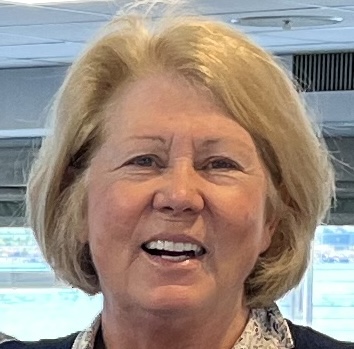
Patty Wolf
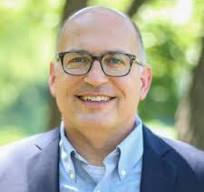
Bryan Bademan

Karl Johnson
Drew and Marie Trotter Executive Director

David Hobbet
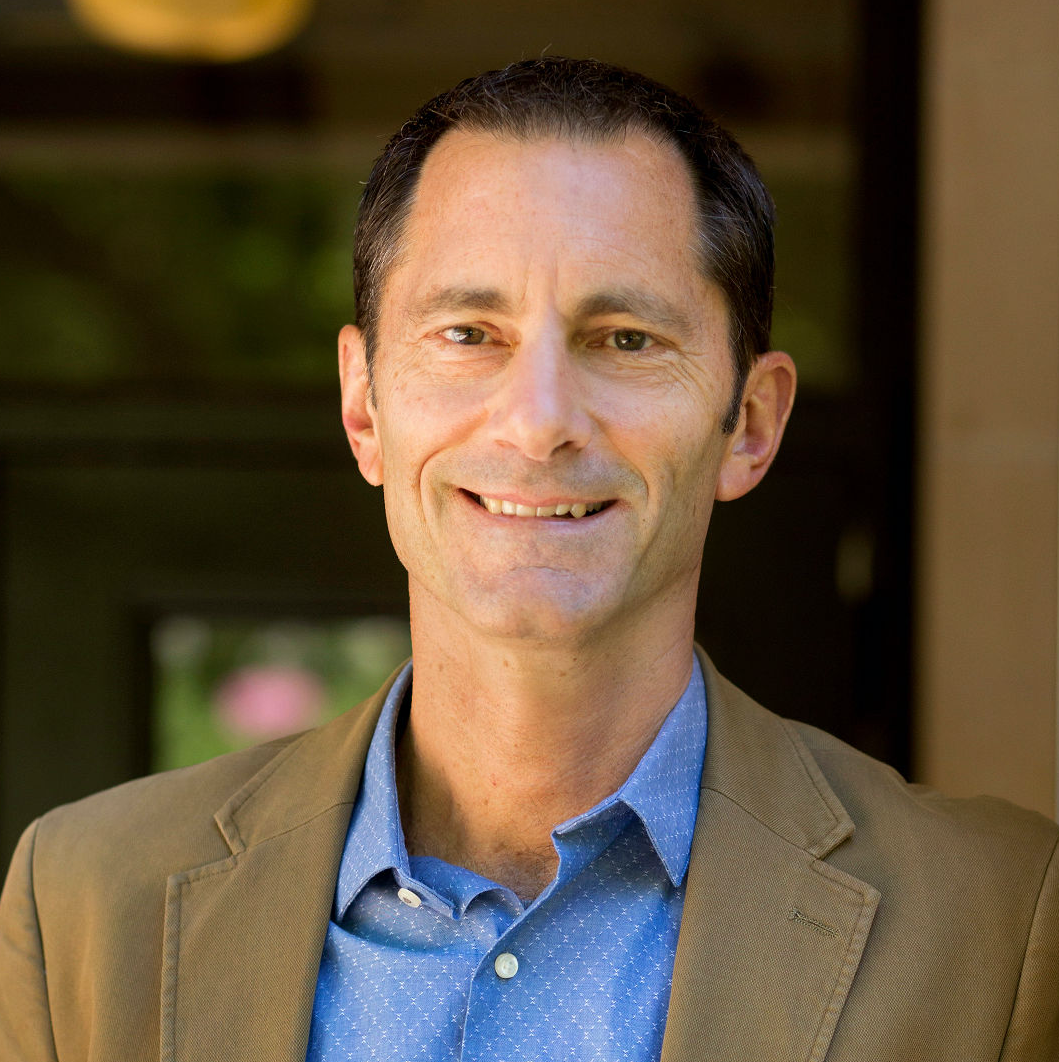
Rick Ostrander
Rick Ostrander serves as Executive Director of the Michigan Christian Study Center in Ann Arbor, Michigan. A graduate of the Moody Bible Institute and the University of Michigan, Rick earned his Ph.D. in American Religious History at the University of Notre Dame and later served as a Fulbright Scholar to Germany. He has served in academic leadership roles at John Brown University, Cornerstone University, the Council for Christian Colleges & Universities, and Westmont College. Among his many publications is, most recently, Academically Speaking: Lessons From a Life in Christian Higher Education (Eerdmans, 2024).
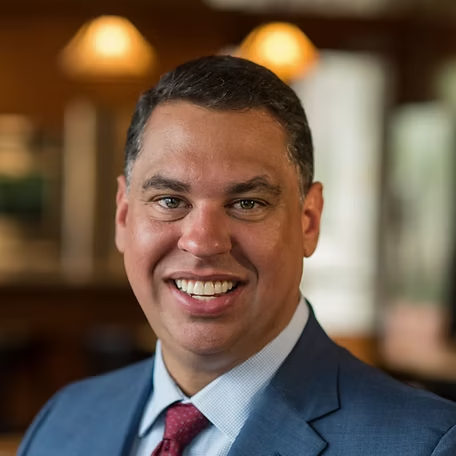
Manuel Rosado
Manuel Rosado serves as President and Partner at Spectrum Investment Advisors. With a deep understanding of fiduciary standards and behavioral finance, Manuel has a proven track record of helping companies implement successful retirement programs. He has been in the investment management and retirement plan industry since 1998 and presently holds the Investment Adviser Representative license (Series 65). In addition to having been a speaker and panelist at numerous industry conferences, Manuel was selected as a 2024 Wisconsin Titan 100 – an award that recognizes Wisconsin’s Top 100 CEOs & C-level executives. A native of Puerto Rico, Manuel is fluent in Spanish. He is active in his community in Mequon, WI, where he lives with his wife.
History


The Consortium of Christian Study Centers grows out of the grassroots Christian Study Center movement. University-based study centers, influenced by destination study centers such as L’Abri and the lay theological education movement led by Regent College (Vancouver, BC), first emerged in North America in the 1970s and 1980s. The earliest centers include the Center for Christian Study (UVA, Charlottesville, 1975), New College Berkeley (UC Berkeley, 1977) and the MacLaurin Institute (UMN, Twin Cities, 1982).
1990s
The 1990s was a fertile decade for Christian scholarship generally and the study center movement in particular. Taking to heart the message of manifestos for Christian learning such as Mark Noll’s Scandal of the Evangelical Mind (1994) and George Marsden’s Outrageous Idea of Christian Scholarship (1997), combined with the creative and catalytic periodical Books & Culture: A Christian Review, new centers began popping up, mostly at research universities. By the end of the decade, these included Rivendell Institute (Yale, 1995), the Christian Study Center of Gainesville (UF, 2000) and Chesterton House (Cornell, 2000). In 1998, when Drew Trotter was invited to give the Francis Schaeffer Memorial Lectures at Covenant Theological Seminary in St. Louis, a handful of center directors intentionally gathered to discuss their common vision for the first time.
2000s
Similar informal gatherings of center directors continued intermittently for about a decade. In July 2007, a dozen directors gathered at Chesterton House and resolved to formalize their collective endeavor. In July 2008, representatives of six centers met in St. Paul, MN, and officially formed the Consortium of Christian Study Centers. The founders were Randy Bare of Westminster House (UC, Berkeley), Rick Howe of the Dayspring Institute, (CU Boulder), Karl Johnson of Chesterton House, Dave Mahan of Rivendell Institute, Bob Osburn of the MacLaurin Institute (now Anselm House) and Drew Trotter of the Center for Christian Study. They crafted a mission statement, adopted by-laws and appointed Drew Trotter as full-time Executive Director, to begin Jan. 1, 2009.
2010s
With the mission of service to member centers, in 2011 the Consortium held its first Annual Meeting—an opportunity for center staff to engage one another in workshops and seminars related to all aspects of center management and programming, as well as to hear keynote addresses from invited scholars. Twenty-two representatives attended. Karl Johnson, David Mahan and Drew Trotter led a panel discussion, sharing insights on what they had learned in a combined fifty years of study center experience. Attendees included several recent center founders, including Missy DeRegibus of Cogito (Hampden-Sydney College, 2010), Rimes McElveen of Mere Christianity Forum (Furman, 2001), Ben Sanders of Arizona Center for Christian Studies (ASU, 2011) as well as Edward Dixon, who would soon start the Center for Christianity and Scholarship (Duke, 2012).
Also in 2011, the Consortium held its first Symposium—an opportunity for center staff and board members to meet for discussion with an author of a recent book over a 24-hour retreat. Eighteen center staff and board members representing nine centers met with James Davison Hunter to discuss To Change the World (2010). Hunter’s notion of faithful presence soon became an influential complement to the movement’s earlier emphasis on Christian scholarship.
In 2016, the Consortium rolled out The Vocation Project, which allows center-affiliated students to attend two weeks of summer school at Regent College in Vancouver, BC, and engage in discussions of vocation and Christian life and study with Drew Trotter and various visiting scholars.
By the end of the decade, the Consortium had 29 member centers and 32 partner organizations. The Consortium office in Charlottesville had 2.5 staff members including Elaine Rollogas, who joined the Consortium as its first full-time Operations Manager in 2014, and Marie Trotter, who became Administrative Assistant in 2016. The 2019 Annual Meeting in Chicago drew over 80 participants. At the meeting, a letter from Karl Johnson, Board Chair, was read indicating that Drew Trotter would step down as Executive Director in December 2020.
2020 & Beyond
Despite the challenges associated with the COVID-19 pandemic, including the cancellation of the 2020 Annual Meeting, the movement continued to grow and thrive.
In January 2021, Karl Johnson succeeded Drew Trotter as Executive Director, while Trotter assumed the new role of Senior Scholar. The 2021 Annual Meeting, held virtually over five days spread throughout the month of July, included over 40 workshops(!) and was attended by over 100 staff and board members. In the fall of that year, the Consortium held a well-attended webinar featuring New Testament scholar N.T. Wright.
Five new centers joined the Consortium in 2020 and 2021, and several existing centers embarked on multi-million-dollar capital campaigns related to the purchase and remodeling of physical facilities. At the end of 2021, a survey found that two-thirds of centers own their own facility. During the winter of 2021-2022, Kim Glass joined the staff team as Communications and Development Manager, and Charity Wahrenberger became the ministry’s Internship Program Director. Kim promptly redesigned the webpage and also the e-newsletter, now called Periscope.
The new Internship Program was made possible by grants from three foundations totaling more than $500,000.
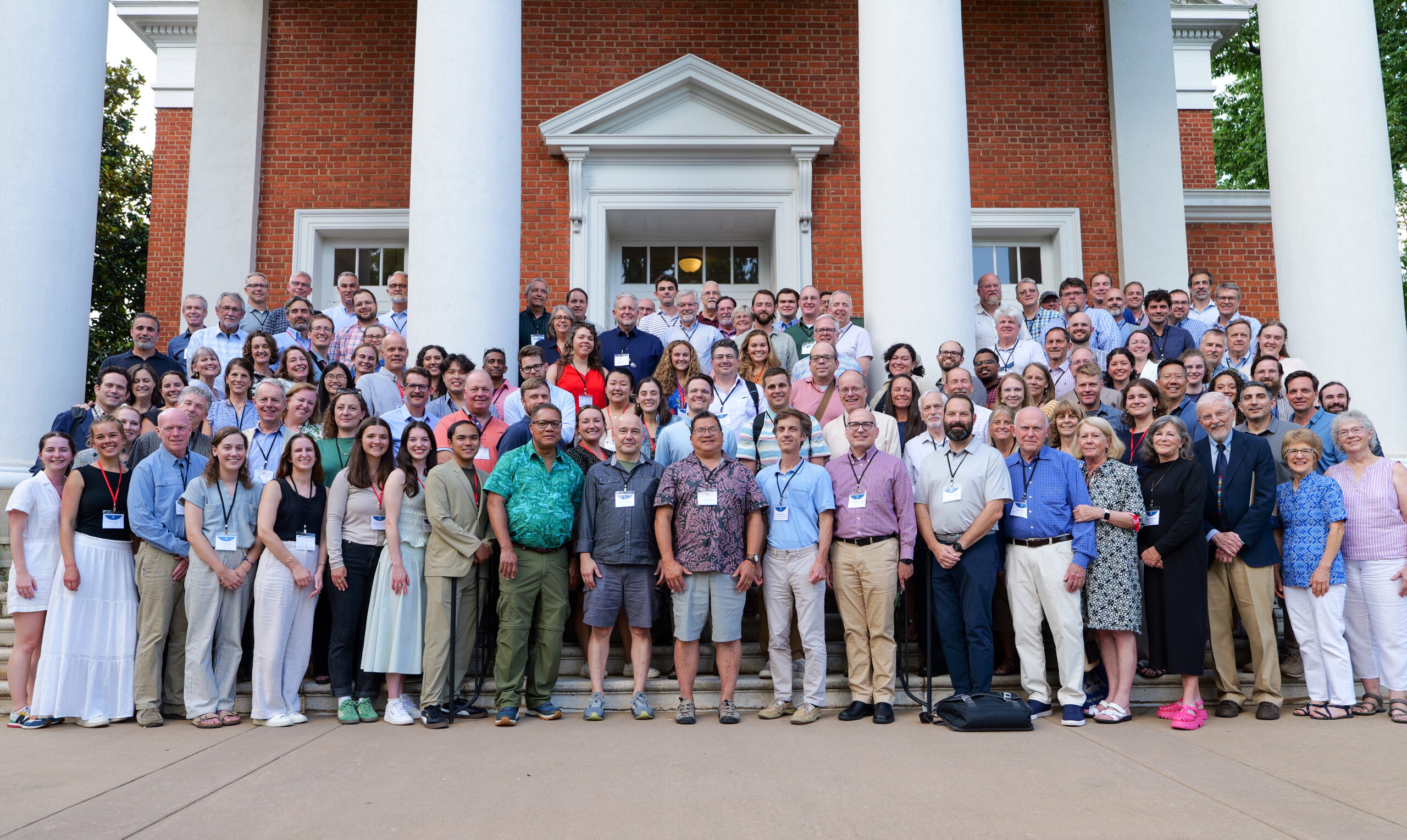
In the summer of 2022, we finally reconvened in person for the 12th Annual Meeting at Upper House, the study center at UW Madison. This was the first time we ever met at a member center, and it was received so well by participants that we decided to stick with the model for at least a few years. In 2023, the Annual Meeting was held at the brand new Anselm House facility in Minneapolis, MN with 120 attendees. Executive Directors enjoyed a pre-conference with philosopher Oliver O’Donovan, and on the last evening we honored Drew Trotter for his many years of service to the Consortium and the movement. In 2024 and 2025, we convened at the North Carolina Study Center and the Center for Christian Study in Charlottesville with about 150 attendees each time.
Meanwhile, the interest in seeing new centers at universities around the country and even around the world continues apace. The Consortium revised its mission statement slightly to note that we are now in the business of catalyzing new centers as well as empowering existing centers, and also to note that we exist to serve centers “around the world.” Indeed, in addition to formally receiving our first international center into the network in 2024 (Saviourgate Study Centre in York, England), we are in contact with a dozen emerging centers in Argentina, Germany, Hungary, South Africa, and elsewhere. We also have over a dozen active start-up efforts in the States.
Related to this increased interest in new centers, the Consortium adopted a strategic plan in 2024 explicitly prioritizing aid to these efforts, and in 2025 we embarked on our first capital campaign toward the same end. The subsequent step up in giving from our generous supporters has made it possible to build additional capacity—more specifically, Fred Barber and Mike Weaver joined the staff team in new, half-time positions as Director of Strategic Initiatives and Membership Director respectively. Rounding out the newly configured staff team, Karlee Bowlby is now our Communications Manager, and Justin Hawkins has taken over mentoring interns.
2025 got off to a stunning start when on January 2nd we received an extraordinarily generous pledge of $1M to kick off the fund conceived of to name the directorship in honor of Drew and Marie Trotter. The board collectively gave thanks to God for this development when we met for our in-person board meeting in St. Augustine one week later. Karl invested a fair amount of time over the course of the year presenting our Case Statement to donors and prospects.
The Annual Meeting, held in Charlottesville, drew about 150 persons. In addition to keynoters Charlie Cotherman and Jen Frey, we featured some of the riches of the local community in the form of workshops led by the likes of Ken Myers, Walter Kim, and Angel Adams Parham. And a highlight of the meeting was the ceremony to honor Drew and Marie, along with the announcement of naming the directorship after them. Meanwhile, shortly after the meeting, world headquarters relocated to a new office across town to Berkmar Drive.
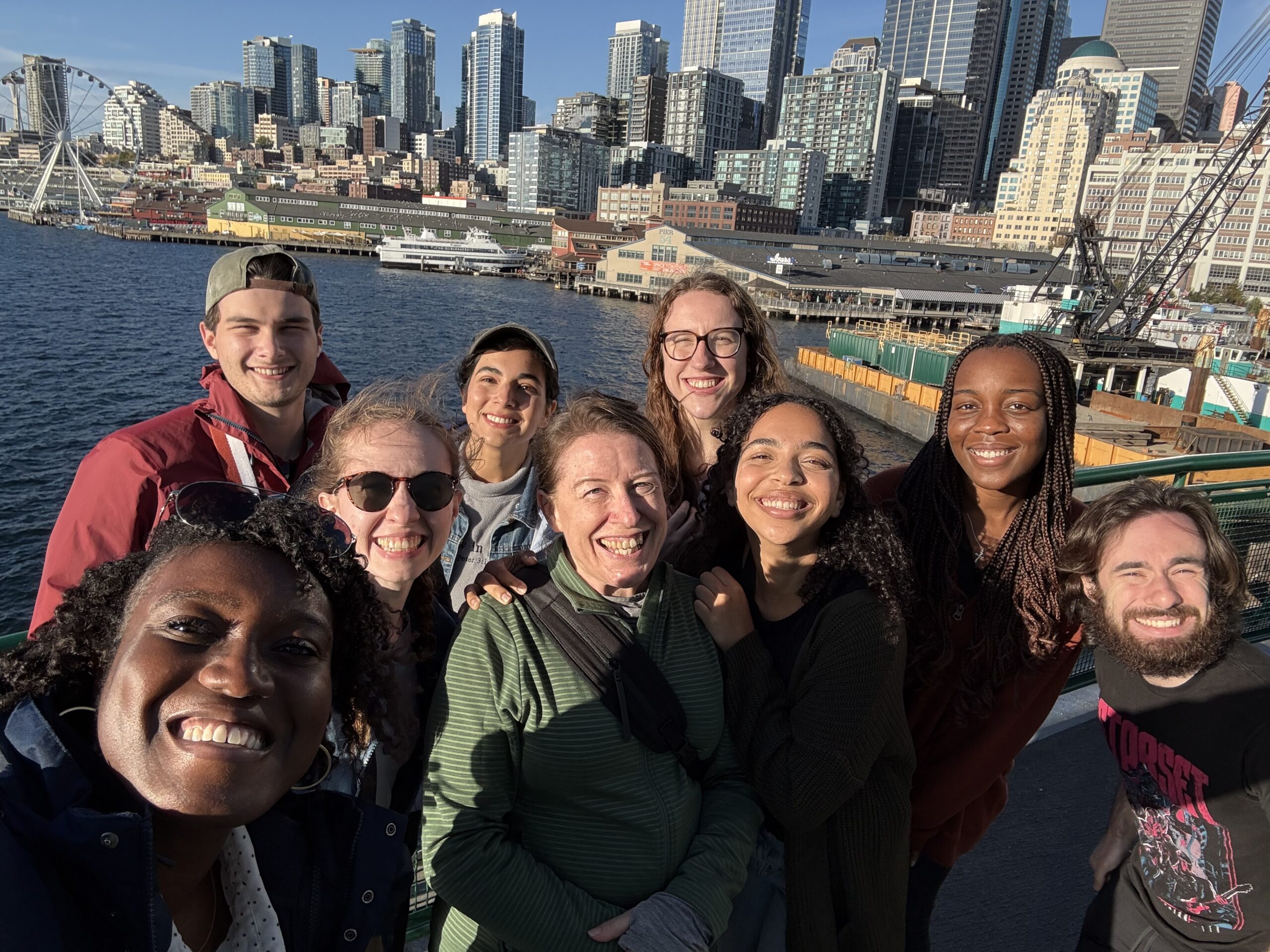
The Intern Program is maintaining healthy momentum with a new cohort of nine stellar young folks. Although we were briefly concerned when Ryan O’Dowd indicated he could not continue as the program mentor, we were thrilled to secure the services of Justin Hawkins to fill that role. Big shoes, ably filled. We received three new member centers this year—Carmen House (Ohio State), Shiloh Society (Texas A&M), and Wake Forest CSC. We are now receiving so many requests—over a dozen in the pipeline (including Princeton, Rice, UCLA, and Michigan State)—that we put membership application on hold in order to revamp the whole process. We are also planning to bring Mike Weaver on part time to help manage the increasing demand for services prospective new centers. All of which brings us to staffing. The workload is increasing, and by God’s grace we’ve been able to step up staffing to mostly meet the load. In addition to Justin, who started in June, Fred stepped up to half-time in July. Then in August we engaged Karlee Bowlby—our first employee in Scotland!—to take over communications from the consulting firm we were using. And in September, Dan Daugherty of the Alcuin Study Center took over co-chairing the Annual Meeting planning committee on behalf of the Consortium.
Statement of Faith

Impact
37
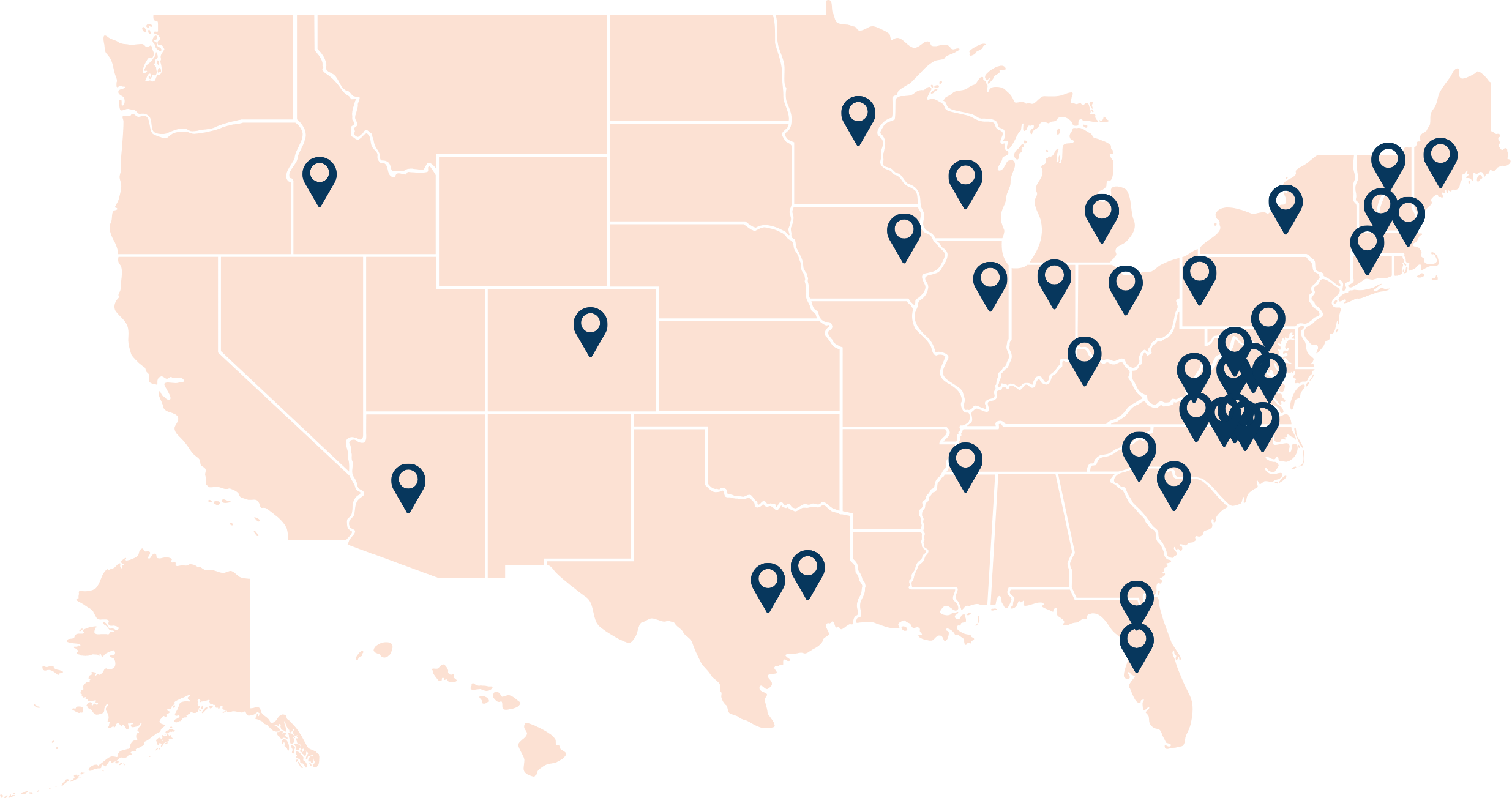
Christian Study Centers located in the US & United Kingdom
188,618
28%
increase in Annual Meeting attendance from 2023 to 2025
Our Member Centers