

By: James K.A. Smith (Grand Rapids: Baker Academic, 2009)
Summary:
What letter is to the left of the “F” on a keyboard? It’s likely you have to pause to think or put your fingers on an imaginary keyboard—but you know it. And you can easily type it. Your hands know before your mind! They know this through ritual, through habit.
Desiring the Kingdom is Volume 1 of a trilogy called “Cultural Liturgies” by philosopher James K.A. Smith. He envisions humans not as containers for information but arrows for desire. True education—from school-based to broader culture-based education—works when it is formative rather than informative. Humans, as “desiring, imaginative animals,” aren’t heads on a stick, not primarily thinkers—but lovers, beings of desire. Education forms desires, desires form a person, and a person goes on to make a people. Imagine a seesaw, where the fulcrum is our habits, which point our desires or loves toward something. This praxis-based notion of how culture functions correctly assumes that all people have and live by a vision of “the good life.” All humans worship; it’s just a matter of what and how.
Themes:
- Liturgy. Used synonymously with worship, liturgies are actions, practices, or rituals that go beyond a church service and can be found in all of culture. Liturgies shape desires.
- Desire. Humans are oriented by what they love, and more so by the body-up than the head-down. We are not thinkers, but lovers. “What we love…defines who we are.”
- Good Life. Liturgies, or habits, direct our desires toward an idea of the good life, or kingdom. The good life is one’s conception of success, salvation, redemption, or peace.
- Worldview vs. Social Imaginary. Too much of a “focus on ideas and beliefs,” rather than the formative aspect of culture, creates informed but ineffective disciples. A social imaginary is “precognitive and prereflective,” before and beyond a worldview. “Lived worship is the fount from which a worldview springs.”
- Stories. A social imaginary is communicated through tales, myths, legends. This is how information best sinks in—consider Jesus’ parables—with stories rather than lectures or sermons.
Discussion Questions:
- How is a shopping mall religious and pedagogical?
- Why is a social imaginary a more helpful concept than worldview?
- How has Christianity been domesticated? With what result?
- What does Smith mean when he says humans aren’t “noncognitive, affective creatures” but rather “desiring, imaginative animals”?
- How does worship involve our bodies?
- If finding the message in cultural artifacts is not enough, then how should we practice “cultural exegesis”? Consider the beginning of Chapter 3.
- How is it that we have to learn to be human?
- How has Christian education largely failed to make “a peculiar people”? How does dualism relate?
- Discuss Psalm 37:4 in light of this book.
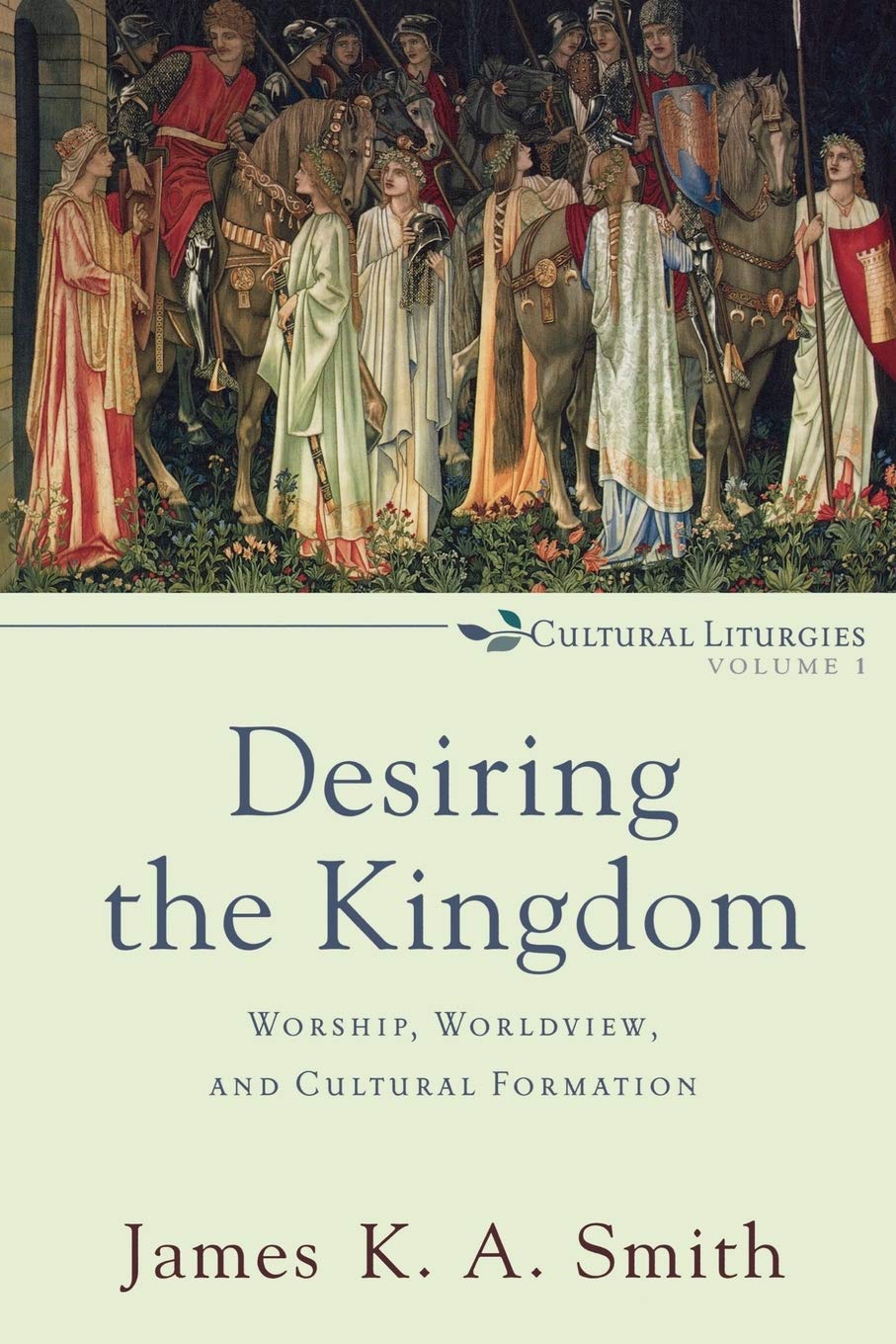
- How is the tapestry on the book’s cover—The Arming and Departure of the Knights—relevant?
Drew Trotter
